
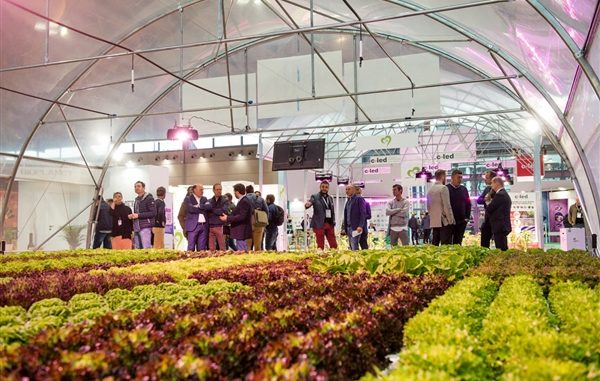
Having new genotypes will be the central theme at the center of the second “diner”, scheduled for May 3 at Macfrut 40th edition, from May 3 to 5 at the Rimini Expo Centre. “New technologies at the service of genetic innovation and the nursery sector” is the title of the event taking place as part of the Salone del Vivaismo, a novelty of the 40th edition of the international fruit and vegetable fair scheduled in Rimini.
Macfrut 40th edition: more attention from the legislator
The day will be coordinated by Luigi Catalano of CIVI-Italia, who comments on the meeting as follows: “The new genetic improvement techniques deserve the attention of the legislator so that they are permitted and applied in a regulatory framework that on the one hand protects the environment and consumers, and on the other hand it allows to produce sustainably in a complex scenario which sees, in order to achieve the goals set by the Green Deal, the sharp reduction of the means of production by farmers”.
This is what CIVI-Italia hopes for, the only Italian inter-professional body for the qualification of national nursery productions, which associates 95% of fruit and vine nurseries, in addition to the national unions of fruit and vegetable producers.
Catalano hopes for a change in this direction: “The customs clearance of the new genetic improvement techniques would make it possible to reduce the time needed to obtain new varieties within the private breeding programs which are currently being developed by the major associated national nursery groups to the consortium, compared to what happened in the past”.
Macfrut 40th edition: a pragmatic and realistic approach
Among the speeches of the day, it should also be mentioned that of Paolo De Castro, effective member of the Agriculture commission of the EU Parliament. Former Minister of Agriculture in previous governments, De Castro hopes for a pragmatic and realistic approach to face the challenge of the ecological transition launched in Europe with the New Green Deal. “On genetic innovation and the use of assisted evolution techniques, the so-called Teas, a pragmatic and realistic approach is needed that puts our farmers back at the centre. For this reason, the European Commission must intervene as soon as possible with a legal provision that authorizes them, avoiding leaving the farmers themselves but also the researchers and all operators in the agri-food sector”.
Also present at Macfrut 40th edition https://www.macfrut.com/, various new biotechnologies, such as Cisgenesis and Genome Editing, known for at least 20 years now. However, in fact not yet applicable in the field because there is no European law. “In principle we all agree on the need to protect the environment with more sustainable agriculture. But those who work in the sector must have access to alternative technologies to chemicals in order to guarantee the protection of crops and an adequate production of agricultural raw materials”.
Therefore, as an intermediate objective, the institutions aim to snatch the examination of a proposal for a regulation on the subject, currently under examination by the Environment Commission, to approve it in the seat that we consider most competent in Agriculture.